Two wheelsFrankfurt
E-bike and e-scooter hire along the Mainufer
Apr–Oct
Höchst to Fechenheim on flat surfaced path, with cobbles, shared sections and a busy museum bank in the middle. Per-minute hire suits a fifteen-minute hop and stops making sense after that. What a battery will and will not do here, and the rules that apply once you leave the river.
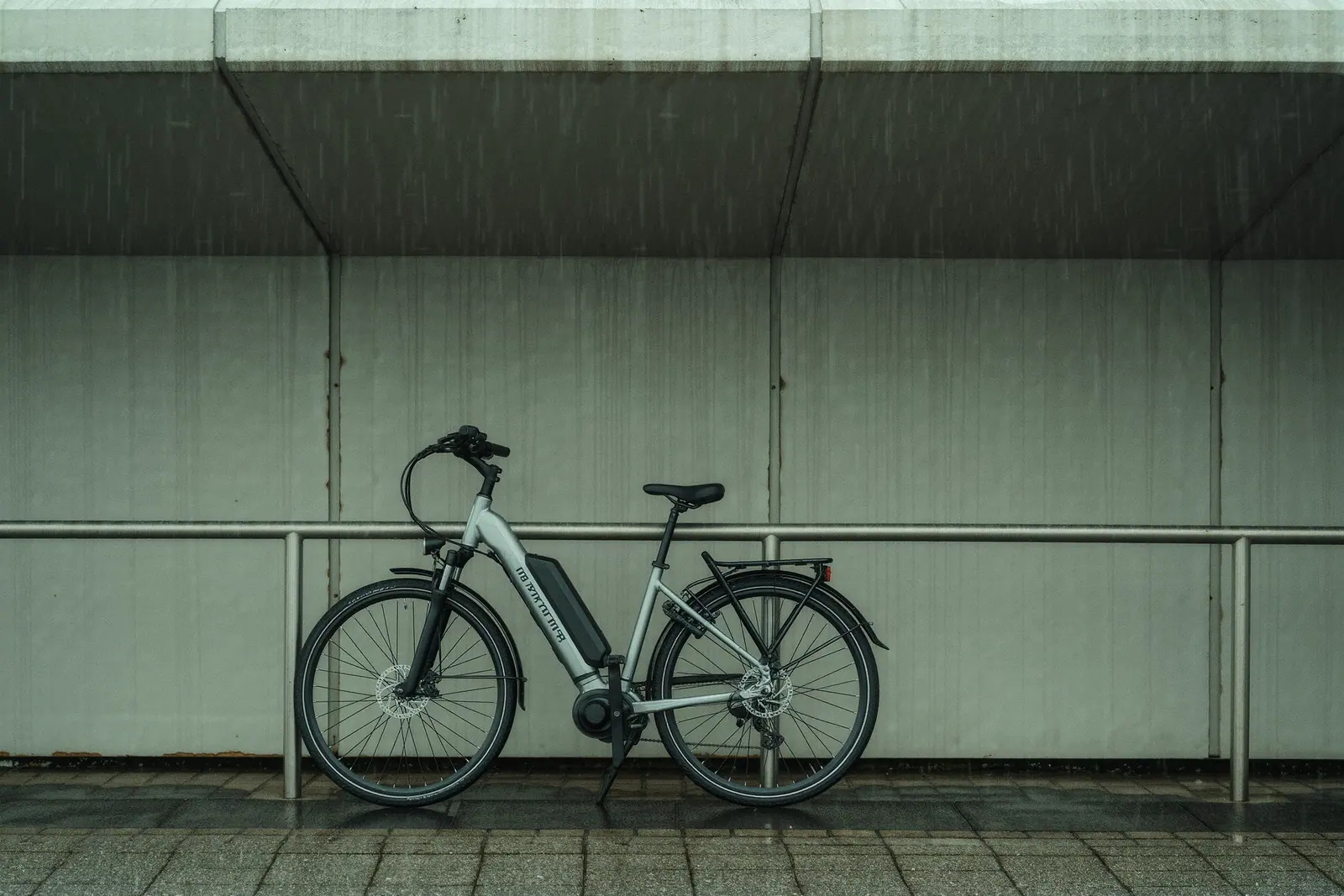
The riverside path is the reason electric hire works in this city. It runs about twenty kilometres from Höchst in the west to Fechenheim in the east, on both banks, essentially flat, with bridges often enough that you can swap sides whenever the crowds or the light suggest it.
It is also the reason people make the wrong hire decision. A path that good encourages you to keep going, and the pricing model most visitors default to is the one that punishes exactly that.
The three ways to get an electric machine
| Free-floating app | Shop hire, by the hour | Shop hire, by the day | |
|---|---|---|---|
| How you pay | Unlock fee plus per minute | Hourly block | Flat day rate |
| Best for | 10–20 minutes, A to B | An afternoon | A day or more |
| Fit | Whatever is nearest | Chosen for you | Chosen for you |
| Included | The machine | Lock, lights, helmet on request | The same, plus a rack |
| Where it ends | Inside the operator’s zone | Back at the shop | Back at the shop |
| Overnight | Not your problem | Not applicable | Your problem |
The crossover comes earlier than people expect. Per-minute pricing is designed for a journey, not for an outing, and an outing along this river is easily two or three hours once you stop for coffee on the south bank. Two unlocks and ninety minutes of riding will usually have overtaken a shop’s day rate, and the shop gives you a bike that fits and a lock you can leave it with.
Work it out for your day. The point is not that one is always cheaper — it is that they are priced for different trips and most people pick by convenience.
What the path is actually like
The centre is the busy part. The museum bank on the south side is a promenade before it is a cycle route, and on a warm evening it carries families, runners and people who have stopped walking without warning. Parts of it are signed as shared and parts are not; the signs are the authority, not the surface.
The north bank through the centre moves faster. East of the old harbour the path empties out and the surface is mixed, with cobbled stretches that are unpleasant on a small-wheeled scooter and merely bumpy on a bike. West towards Höchst it is quieter again and largely surfaced.
The bridge ramps are the other thing to know. Crossing between banks means going up and over, and several of the ramps are tight, stepped or shared with pedestrians. Walk them at busy times.
Battery, and what it will not do
A city e-bike will run the full length of the river path and back on one charge without drama. Flat riding at moderate assistance is what these machines are specified for.
The hills are a different demand. The ground rises the moment you leave the plain at Oberursel, Kronberg or Bad Homburg, and climbing into the Taunus draws power at several times the flat rate. A hire bike that shows three-quarters at the bottom of the climb can be walking pace on the way home. If the hills are the plan, say so at the shop and ask specifically about range under load — and check whether a charger comes with an overnight hire, because it usually does not.
The rules, in general terms
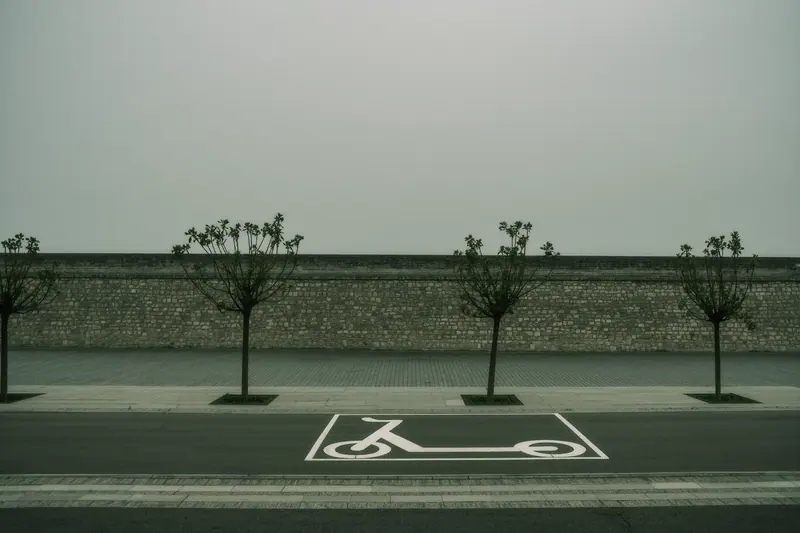
E-scooters here are treated as motor vehicles under national law. That brings a minimum age, compulsory insurance shown by a small plate on the back, a prohibition on riding on footways, a ban on carrying a second person, and the same alcohol limits that apply to driving a car. Enforcement is not theoretical, particularly along the river on summer evenings.
E-bikes with pedal assistance up to the usual assisted limit are treated as bicycles, with no licence, no plate and no minimum age of the same kind. Faster machines are a separate category with their own requirements.
All of this is set nationally and does change, so verify the current position rather than inferring it from what an app allows you to unlock. Where you may leave a scooter at the end of the ride is a separate question again, governed locally, and it is where most people actually get caught — see where e-scooters may be left.
The season, and the evenings
April and May are the best riding of the year here: long light, cool air, the path not yet crowded. June to August is warm and the centre section is genuinely busy after work, which is when the eastern reach past the old harbour earns its place. September and early October are the second good window. Through the winter the path is rideable but not uniformly gritted, and the shop fleets thin out.
The one predictable disruption is a big fair. In those weeks the sharing fleets around the main station and the exhibition grounds are picked clean by mid-morning, for the same reason everything else in this city is — the pattern described in car hire during the big fair weeks.
What to actually do on a first evening
Hire an e-bike from a shop for twenty-four hours rather than unlocking a scooter four times. Ride east along the north bank past the old harbour where the river is working and quiet, cross at a bridge, come back along the south bank as the light goes, and stop somewhere in Sachsenhausen.
If you have a boat booked, the bike is also the neatest way to reach the pontoon, which is not a place you can conveniently drive to — hiring a boat on the Main covers why. And if you are here for several days rather than one evening, the comparison worth reading next is bike hire for a few days against the apps, because the arithmetic changes again.
What to check before you book
- Work out your likely riding time before choosing between an app and a shop. The crossover is earlier than you think.
- Check the battery state before you accept a shop e-bike, and ask what range it realistically has on hills.
- Ask whether a charger is included if you keep the bike overnight. It usually is not.
- Confirm the minimum age and what documents are needed for an e-scooter — the rules are national and worth verifying.
- Look at where the operator lets you end a ride before you set off along the river; bays are not everywhere.
- On the shared sections of the riverside path, check the signs. Parts of it are a pedestrian promenade.
Questions people actually ask
- How long is the riverside path through Frankfurt?
Roughly twenty kilometres of near-continuous riverside from Höchst in the west to Fechenheim in the east, on both banks, with bridges frequently enough that you can cross whenever you like. It is essentially flat. The centre section is busy and partly shared with pedestrians, while the eastern and western ends are quieter and quicker. Riding one bank out and the other back is the obvious loop and it is a genuinely good afternoon.
- Is a per-minute app cheaper than hiring from a shop?
For a short hop, yes; for a day, no. Free-floating hire is priced with an unlock fee plus a per-minute rate, which suits a fifteen-minute journey between two fixed points. A shop day rate is a flat figure that includes a lock, lights and a bike that fits you. Somewhere in the first hour or two of riding the two cross over, and after that the gap widens quickly. Work it out for your own day rather than assuming.
- Will an e-bike battery get me into the Taunus and back?
Along the river, easily — you can ride the whole path end to end and back on a charge. Into the hills, treat it as a genuine question. Climbing out of Oberursel or Kronberg draws far more from a battery than flat riding does, and a city hire bike is not specified for it. If the Taunus is the plan, ask the shop about range under load, and expect to be riding an unpowered bike home if you misjudge it.
- What are the rules for e-scooters here?
They are treated as motor vehicles under national rules, which brings a minimum age, a requirement for insurance shown by a small plate on the rear, a prohibition on riding on footways, a ban on carrying a passenger, and the same drink-driving limits that apply to drivers. Enforcement is real. The details are set nationally and can change, so verify the current position before you ride rather than relying on what an app screen implies.