GearFrankfurt
Hiring a suit or dinner jacket for a Frankfurt banking event
Sep–Dec, Feb–Apr
An invitation lands three weeks out and the dress code is one line long. What a hire shop in Frankfurt can actually put you in, the difference between the three codes people confuse, when the rails empty, and the small decisions — shoes, shirt, studs — that separate a hired outfit from an obvious one.
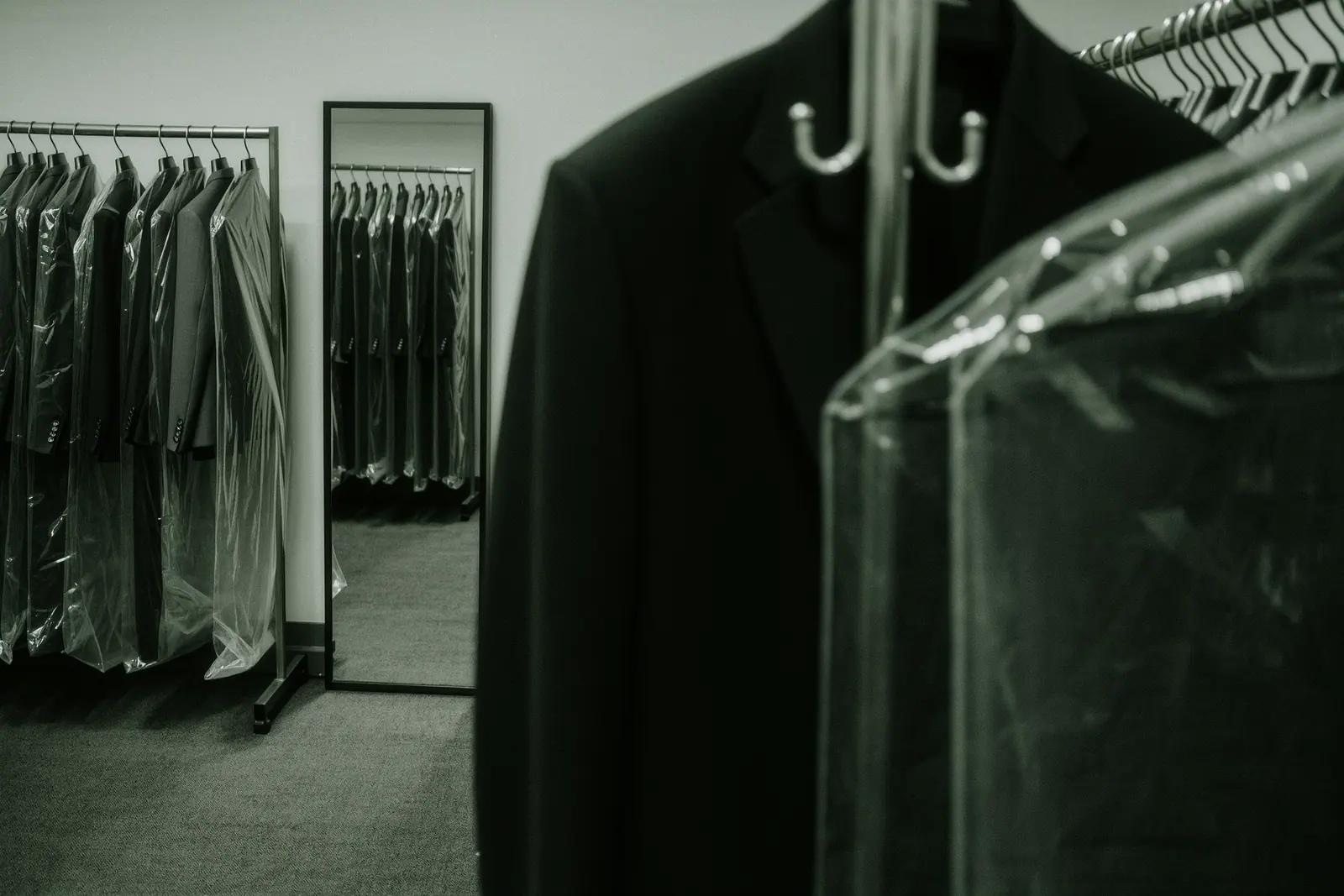
The invitation says black tie and it is for a Thursday evening in three weeks, in a room on an upper floor with a view over the Taunusanlage. Nobody who works in the district finds this remarkable. It happens through the autumn, again around the spring fairs, and the number of men in Frankfurt who own a dinner suit is much smaller than the number who wear one.
So the rails get emptied, refilled and emptied again, on a rhythm that has more to do with the hall calendar and the winter party season than with anything else.
Read the dress code before you book anything
Three codes account for almost every invitation in the district, and people confuse them constantly.
| The line on the invitation | What it means | What to hire |
|---|---|---|
| Business attire, lounge suit | An ordinary good suit | Charcoal or navy two-piece, plain tie |
| Dark suit, informal | Same, but no light colours | Charcoal or midnight navy, white shirt |
| Black tie, dinner jacket | Dinner suit with bow tie | Dinner jacket and matching trousers, black bow tie |
| Black tie optional | Dinner jacket welcome, dark suit safe | Either, but decide early — the rails do not wait |
| White tie | Tailcoat, very rare | A specialist hire, book six weeks out |
“Black tie optional” is the trap. It reads as permission to wear a suit and in practice most of the room takes the other option, which leaves the two or three people in business suits looking like they arrived from the office, which they did. If the event is a dinner rather than a reception, hire the dinner jacket.
When the rails are empty
Formalwear hire in Frankfurt has a demand curve unlike anywhere else in the city, because two separate populations want the same garments.
- Late September to mid-December — the long peak. Company evenings, awards dinners, and the autumn fair season overlapping the start of it. The last two weeks of November are the hardest fortnight of the year to get a well-fitting jacket at short notice.
- January — quiet, and the best time to hire for anything.
- February to April — the spring fair weeks. Demand arrives in bursts tied to specific evenings, and it comes largely from visitors who did not pack a dinner suit for a business trip.
- May and June — moderate, mostly weddings and summer parties.
- July and August — empty rails in the good sense. Walk-in territory.
The pattern matters because it is not a season. It is a calendar, the same one that decides whether an hourly meeting room in the district costs what it costs in July or what it costs in October. The booking window on the index page follows the same logic.
What is in the hire and what is not
Assume the following are separate line items until told otherwise: the shirt, the bow tie, the cummerbund or waistcoat, studs and cufflinks, braces, a pocket square, and shoes. Some shops bundle a complete outfit at a package rate, and that is usually better value than assembling the same list piece by piece.
Two of those are worth handling yourself.
The shirt. A hired dress shirt has been worn by other people and washed industrially, and the collar is the part that shows. A plain white shirt with a turndown collar and a covered placket, bought once, works for every black-tie evening you will ever attend and costs less than three hires.
The shoes. Hired shoes are the weak point of any hired outfit. They are usually a size approximately right, they have no break-in, and by the second hour of standing they are the only thing you are thinking about. Black leather oxfords you already own are correct and comfortable. Polish them.
The mechanics of the hire
Collection is normally the day before the event, and the return deadline is counted in hours. A Thursday evening usually means back by Saturday morning or Monday morning, and a late return is charged as another day. Ask specifically what happens over a weekend, because the shop’s Saturday hours are shorter than its weekday hours and it will not be open on Sunday.
Cleaning after the hire is normally included and you should not attempt it yourself. What is not included is damage: a burn, a tear, a lost stud, or a red wine stain that does not come out. That is what the deposit is for, usually a card hold in the low hundreds released after the garment has been checked.
If you are staying in the city for a fair week, work out where the shop is relative to where you are sleeping before you book. Collecting a garment bag in Bornheim and carrying it across town on a crowded evening tram is a poor end to a working day; a shop near the district or near the main station is worth a slightly worse rate. The same logic applies to where you rent for the week in the first place.
The thing that actually makes the difference
Get the trousers hemmed. Not pinned, not folded under, hemmed — or at minimum tacked properly by the shop. Everything else about a hired dinner suit can be made to look deliberate, but trousers breaking twice over the shoe read as borrowed from across the room. That is a fitting-room decision, and it needs the shoes you are actually going to wear on the day, which is the single most useful thing to bring to a fitting.
What to check before you book
- Book the fitting, not the garment. The rail has your size; getting it to fit is the appointment that fills up.
- Ask what the hire includes — jacket, trousers, waistcoat or cummerbund, bow tie, shirt, studs and links are frequently priced apart.
- Check the return deadline in hours, not days. A Saturday event with a Monday return is normal; a Sunday return is not.
- Confirm whether alterations are included, and whether they are pinned, tacked or actually sewn.
- Ask what happens to the deposit if the garment comes back with a mark. Cleaning is usually included; damage is not.
- Take your own shoes if you own black leather ones. Hired shoes fit worse than hired jackets and are noticed more.
Questions people actually ask
- How far ahead should I hire black tie in Frankfurt?
Two to five weeks for a common size, and longer in the run-up to the winter party season. The pressure is not evenly spread: late November and early December empty the rails, and so do the evenings attached to the big spring and autumn fairs, when a large number of visiting exhibitors want the same thing on the same night. Outside those windows a fortnight is usually comfortable.
- What is the difference between black tie and a dark suit?
A dinner jacket has satin or grosgrain facings on the lapels, a matching stripe on the trouser, no vent or side vents depending on the cut, and it is worn with a bow tie and either a waistcoat or a cummerbund. A dark suit is a suit. Where an invitation says lounge suit or business attire, a plain charcoal or navy two-piece with a tie is correct and a dinner jacket is not.
- Can I hire just the jacket?
Most shops will hire individual pieces, but a jacket hired without its trousers rarely matches the black you already own — dinner-suit black is a specific black and daylight is unforgiving about it. If you have the trousers from the same garment, fine. Otherwise hire the pair.
- Is hiring cheaper than buying?
For one or two evenings a year, clearly yes once you include cleaning and storage. The crossover comes at roughly three or four wearings a year, at which point an entry-level dinner suit that actually fits you is the better buy and will look better than anything from a rail. Frequent attendees should own the suit and hire only the exotic requests.