On the roadFrankfurt
Hiring a van for a move in Bornheim, and the permit
All year
A fourth-floor flat with no lift, a street where every space is taken by six in the evening, and a stairwell built before anyone owned a wardrobe. The permit matters more than the van, the hour is the unit that depots actually sell, and the last weekend of the month is the one to avoid.
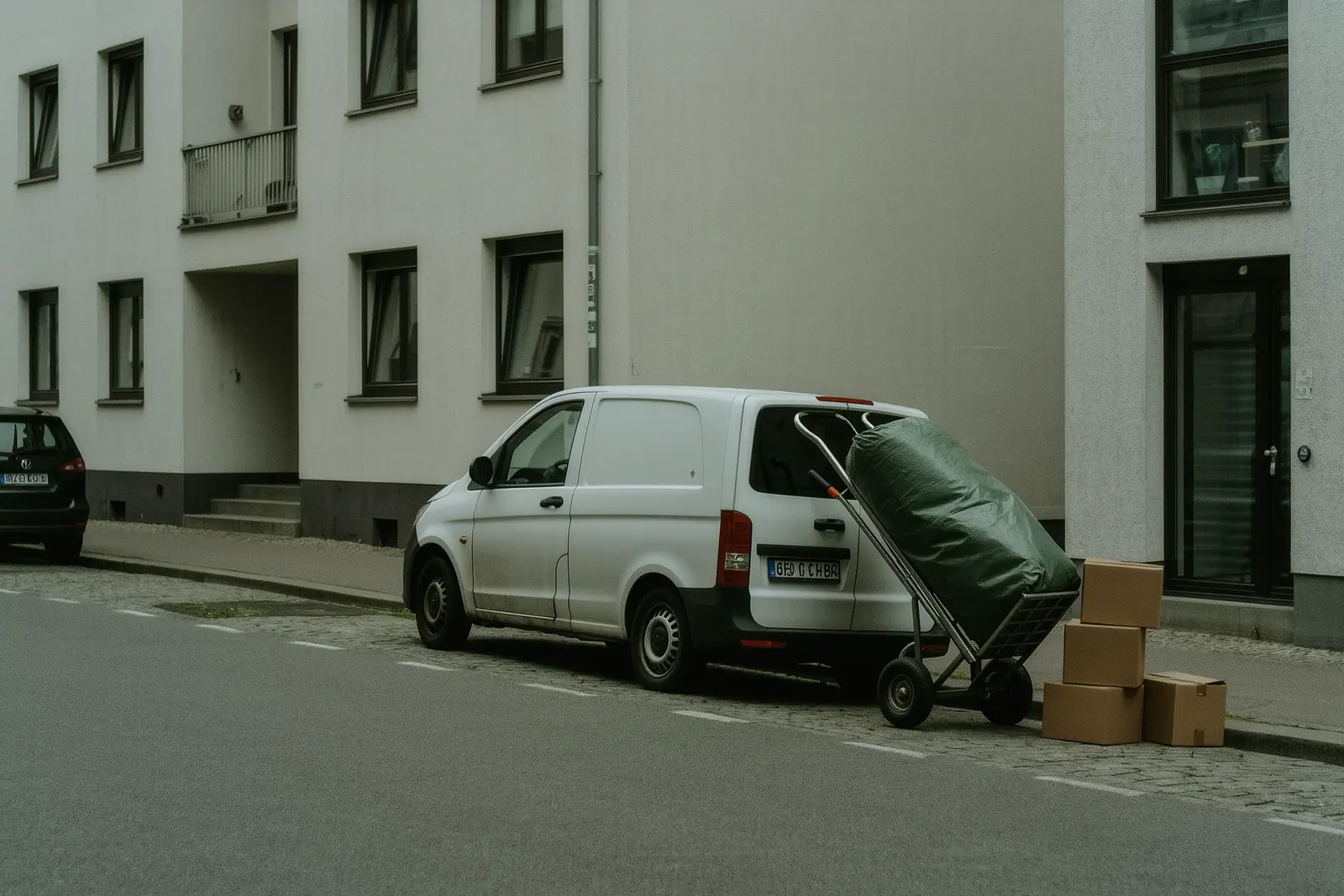
The flat is on the fourth floor of a building put up before the First World War, the stairwell turns twice on every flight, and there is no lift. Outside, the street fills from about six in the evening and stays full until the following morning. Somewhere in that picture you have to put a van.
The van is the easy part. Everything that goes wrong on a Bornheim moving day goes wrong before the van arrives.
The permit is the long lead item
To reserve kerb space on a public street you need a temporary no-parking zone authorised by the city, with signs standing on the pavement for a set period beforehand. That notice period is the point of the whole exercise: it gives the residents who park there a chance to move, and it is what makes the zone enforceable if somebody has not.
Three things about it are worth knowing before you start.
- The application goes through the city’s road traffic office. The route, the fee and the notice period are set by the city and they do change, so confirm the current position rather than copying what somebody did two years ago.
- Firms exist that apply, deliver the signs and collect them again. They cost more than doing it yourself and they absorb the part of the process that is easiest to get wrong.
- Without the permit you have no claim to any space at all. On a good day you find something ninety metres away. On the last Saturday of the month you do not, and you carry a wardrobe past four buildings.
What size van, and what your licence covers
| Van | Realistic load | On a Bornheim street | Note |
|---|---|---|---|
| Small panel van | A studio, in two runs | Parks anywhere a car does | Easiest to reverse into a gap |
| Medium, high roof | One bedroom, one or two runs | Fits, with the permit | The default for a city move |
| Long wheelbase, high roof | Two bedrooms | Awkward; needs the full zone | Will not enter most city decks |
| Box van with tail lift | Whole household | Difficult on side streets | Check weight against your licence |
The weight limit a standard car licence covers is set nationally, and most hire vans are built to sit just underneath it — which means a fully loaded one can sit above it. That is a real risk with the largest sizes and a real reason to take the medium van twice rather than the big one once. Confirm the figure and the loaded position with the depot before you drive; do not treat any number you read online, including here, as current.
The hour is the unit
Depots in this city sell vans in blocks of hours as readily as days, and for a move that stays inside the district that is the honest way to buy it. Four hours with a permit at both ends beats a day rate you will not use, provided the overrun rate does not undo the saving. Ask what it is.
What does not flex is the calendar. Residential leases here overwhelmingly turn over at the end of a month, and at the end of a quarter more than that, so the last Friday and Saturday of any month are the two hardest days in the year to hire a van in Frankfurt. Add a fair week to that and the depots are empty by mid-morning, because stand builders take vans for the build-up and break-down weeks either side of the public days — the pattern described in car hire during the big fair weeks.
Move mid-month and mid-week if you have any choice at all. It is the single cheapest decision available to you.
Bornheim specifics that catch people out
The main street through the district carries a tram, and you cannot stand on the tracks or in the space a tram needs to pass — a van parked there will be moved and it will be moved at speed. Market mornings fill the square and the streets around it. Bin collection runs early and the lorry needs the same width you do.
The courtyards behind the older blocks are the other trap. Several of them are reached through an archway built for a handcart, and a high-roof van will not go under it. Measure the gate height, not just the width, and measure it yourself rather than trusting a letting agent’s description.
Finally, the whole district sits inside the city’s low-emission zone. A modern hire van from a large depot will carry the right sticker without you thinking about it; an older van from a small yard may not, and the liability for driving in without one lands on the driver. The general position is set out in the low-emission zone and rented vehicles, and the current standard should be checked with the city before your date.

Returning it
The invoice is where a cheap hire stops being cheap. Fuel policy is usually full-to-full, with a service charge if you leave it short. Mileage is capped on most hourly and daily van products, and while an inner-city move will not trouble the cap, a run out to Oberursel or Bad Homburg will. Cleaning is charged if the load area comes back with plaster dust in it, which after a move it will unless you sweep it.
Blankets, straps, a sack truck and a loading ramp are separate line items at most depots, and hiring them with the van is cheaper than buying them at nine on a Saturday morning. Take more straps than you think. A wardrobe that shifts on the first corner ends the day.
If the move is out of the region rather than across it, price a one-way drop before you commit to driving the van back empty. It is more restricted for vans than for cars and it has to be arranged at booking, but on anything over an hour’s drive it pays for itself in fuel and in the half-day you get back.
What to check before you book
- Apply for the temporary no-parking permit through the city well before the date, and confirm how many days the signs must stand before it can be enforced.
- Measure the courtyard gate and any archway height before you book a high-roof van. Older blocks here were built for carts, not vans.
- Confirm the gross weight of the specific van against what your licence covers — the threshold is set nationally, so verify rather than assume.
- Book the hourly block rather than a day if the move stays inside the district, but check what an overrun costs per hour.
- Ask whether blankets, straps, a sack truck and a ramp are included or charged separately. They usually are separate.
- Check the mileage allowance. Inner-city moves rarely exceed it; a move out to the Taunus edge easily does.
- Confirm the van carries the emissions sticker for the city zone, especially on an older vehicle from a small depot.
Questions people actually ask
- Do I need a permit to park a hire van outside my flat in Frankfurt?
For a reserved space on a public street, yes — you need a temporary no-parking zone authorised by the city, with signs put out in advance. Without one you have no right to a space, and on a Bornheim street in the evening there will not be one. The application route, the notice period and the fee are all set by the city and change, so check the current requirements with the road traffic office rather than relying on what a friend did last year.
- How far in advance do the signs need to go up?
There is a minimum notice period before the zone becomes enforceable, and it exists so that a resident who parked legally is not towed the next morning. The exact number of days is set by the city and is the single thing most people get wrong. Confirm it when you apply, and note that a firm putting the signs out on your behalf will usually build that period into their quote.
- What size van do I need for a one-bedroom flat?
A medium panel van with a high roof and a medium wheelbase usually does a one-bedroom flat in one load, or two if you own books. It still parks on an ordinary Bornheim street, which the next size up does not. If the flat has a lot of furniture rather than a lot of boxes, the constraint is the stairwell rather than the van.
- Can I rent a van by the hour rather than the day?
Yes, and for a move inside the district that is usually the cheaper choice. Depots here sell vans in blocks of hours as well as days, which suits a two-street move with a permit at both ends. Check the overrun rate before you commit, because a block that runs over is charged at a rate that can quickly overtake the day price.