PlacesFrankfurt
Event spaces on the Main, and what a private party needs
May–Sep
The riverbanks look like the obvious place for a summer event and they are the most heavily regulated ground in the city. Who controls which stretch, what a private party on public land actually requires, where the noise limits bite, and why a boat solves some problems and creates others.
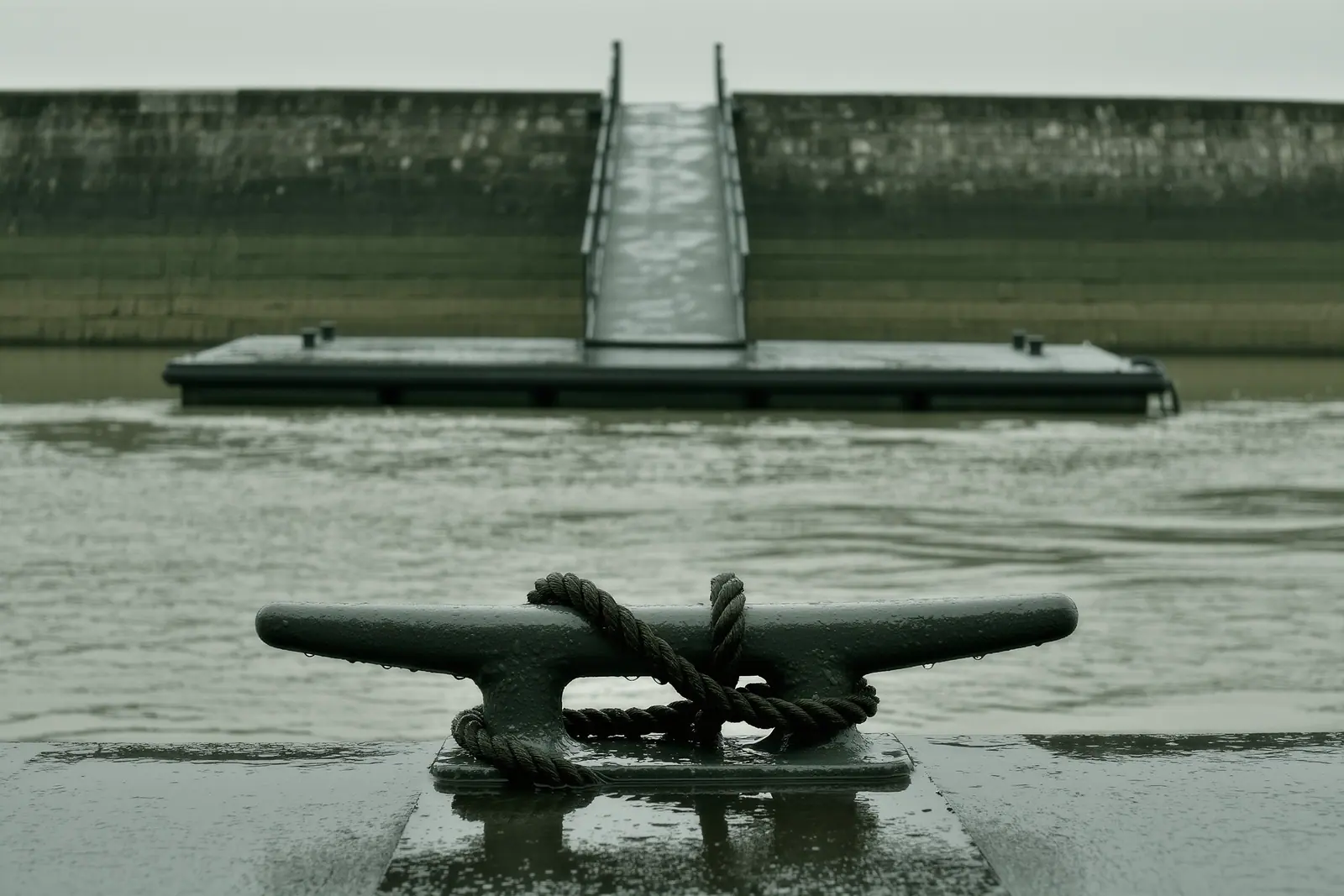
The idea always arrives the same way. Somebody stands on the embankment on a warm evening in June, watches the light on the water and the towers behind it, and decides that this is where the summer party should be. It is a good instinct and it runs immediately into the least flexible thing in the city: who owns the ground you are standing on.
The Main runs straight through the middle of Frankfurt with a public path on both banks, museums along the south side, offices and the old centre on the north, and residential buildings within earshot of nearly all of it. Almost none of that is space you can simply book.
Who controls what
| Where | Who controls it | What that means for an event |
|---|---|---|
| The public path and lawns on both banks | The city | Organised events need permission, with conditions |
| A terrace attached to a building | The building or its tenant | A hire contract, and the building’s own rules |
| A moored vessel | Its operator | Their licences cover the event, within their limits |
| A pontoon or landing stage | The operator or the city | Access is often separate from the vessel |
| An indoor space overlooking the water | The venue | Straightforward, and the expensive option |
| The bridges and their approaches | The city | Not available, and not worth asking |
The distinction that matters most is between a private event and one open to the public. Ticketed events, anything advertised, and anything the public can walk into are treated differently from a closed company reception, and the difference reaches into permissions, safety requirements and fees. If you are unsure which side of the line your event falls on, that is the first question to resolve, and it should be resolved with the authority rather than internally.
The realistic options, in order of difficulty
- An indoor or terrace venue with a river view. A hire contract, a fixed capacity, existing power and toilets, and a venue that has done this before. The most expensive per head and by a distance the least trouble.
- A boat. The operator holds the licences and the capacity is fixed by the vessel. Two to three hours on the water, boarding at a landing stage, and a timetable that does not move. Good for a reception, poor for anything where people need to arrive and leave freely.
- A private ground near the water — a courtyard, a yard, a garden belonging to somebody. All the freedom of private land, and the neighbours are still there.
- Public riverside ground. The picture everybody has in mind, and the hardest to arrange: permission, conditions, no power, no water, no toilets, and full exposure to weather. Possible, and it needs months rather than weeks.
What an outdoor position actually lacks
Four things, and each of them is a hire order.
Power. There is none. A generator is the standard answer, it is noisy, and the noise counts towards whatever limit you have been given. Site it downwind and far away, and hire a quiet one rather than the cheapest.
Water and waste. Containers in, waste out, and a plan for the end of the evening that does not involve leaving anything on a public path.
Toilets. Hired units, delivered and collected, on hard standing that a vehicle can reach.
Cover. A marquee is not just shelter, it is a structure, and structures on public ground usually require their own approval. On private ground it is simpler but still needs ballast, because the riverbank gets wind.
Everything else — glassware, coolers, high tables, lighting — is the same catering kit you would hire for an indoor reception, with the addition that all of it must be carried the last distance by hand.
Sound, which is where events get stopped
The central riverfront has residential buildings within earshot along most of its length, and the water carries sound rather than absorbing it. General quiet periods apply in the evening and at night, and event permissions typically attach their own conditions: a finishing time, a level, sometimes monitoring.
Two practical consequences. Amplified music outdoors on the bank is a much smaller thing than most people imagine, and it usually ends earlier than the party does. And a speech through a small speech-reinforcement system is far easier to get agreement for than a band. Plan the evening so that the loud part happens early and the late part is conversation.
Confirm the current limits and finishing times with the city for your exact location. They are not uniform along the river and they are not the same for private and public events.
The season, and the weeks to avoid
May to September, realistically. June and September give the best combination of weather and light. July and August are the most competitive, and August in particular includes the large embankment festival that occupies much of the central river frontage for several days and makes the surrounding area impassable for anything else.
Outside the summer, an outdoor event needs a real indoor alternative rather than an optimistic one, which usually means paying for a venue you may not use. At that point the hired room with a view is the cheaper answer, and it does not depend on a forecast.
What to do first
Not choose a date. Choose the ground, find out who controls it, and ask them what is permitted and by when they need an application. Everything else — the caterer, the boat, the marquee, the guest list — is available at short notice in this city. The permission is not, and it is the only part that cannot be bought late.
What to check before you book
- Establish who owns or controls the exact ground you want to use, before you plan anything on it.
- Ask the venue in writing what is permitted for amplified sound, and until what time.
- Check whether your event counts as private or public under local rules — the answer changes the requirements.
- Confirm the power situation. Most riverside positions have none, so a generator is an order and a noise source.
- Ask about access for delivery vehicles, and whether the embankment is reachable by van at all.
- Plan for weather with an actual alternative, not an intention. A riverside event in a thunderstorm has nowhere to go.
- Verify the current permission requirements with the city authority rather than relying on the venue's summary.
Questions people actually ask
- Can I hold a private party on the riverbank in Frankfurt?
Not simply by turning up with equipment. The riverbanks are public open space managed by the city, and organised events on public ground generally require permission, with conditions on sound, waste, safety and sometimes fees. Small informal gatherings and a formal event with a marquee and a sound system are treated very differently. Confirm the current requirements with the city before committing to a date.
- What are the noise rules for an outdoor event?
Germany applies general quiet periods in the evening and at night, and local authorities set additional conditions for events, which can include a sound limit, a finishing time and monitoring. Riverside positions carry residential buildings on one bank or the other for most of the central stretch, so limits tend to be strict. Treat any permission as specifying a time and a level, and plan the running order around it.
- Is hiring a boat easier than hiring a space?
It moves the problem rather than removing it. A boat comes with an operator who holds the licences, which handles a great deal, and it solves the ground-permission question entirely. It introduces boarding times, capacity limits set by the vessel, a fixed timetable you cannot overrun, and the fact that nobody can leave early. For a two to three hour reception it works well.
- When is the season for riverside events?
May to September in practice, with the best weather in June and September and the highest competition in July and August. The riverbank is at its busiest in August during the large embankment festival, when much of the central frontage is occupied and unavailable. Spring and autumn events happen but need a covered alternative, which changes the shape of the budget.